Vetted by NeuralPress's Multi-Agent Verifier for strict factual validity and event relevance. Our compliance engine cross-checks and filters search results to ensure zero false correlations or misleading content.
Estimated Economic Indicators
Comparison of foreign reserves and monthly import requirements in USD Billions.
Primary Sources
Opposition Raises Alarm Over Sri Lanka's Ability to Meet IMF Targets
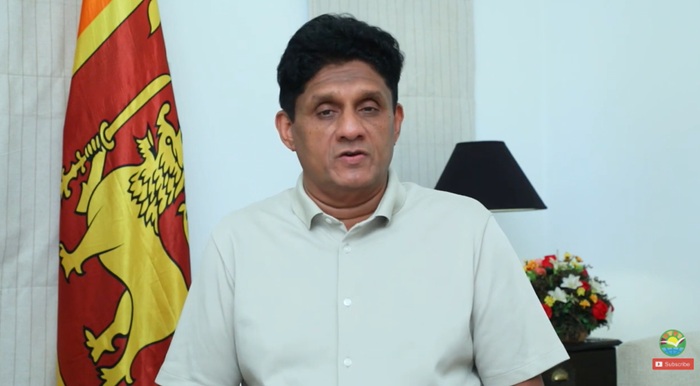
By Our Correspondent Opposition Leader Sajith Premadasa has called on the government to immediately begin negotiations for a successor programme with the International Monetary Fund (IMF), warning that Sri Lanka is not on track to meet key reserve targets under the current arrangement. “I am calling on the government today to begin negotiations for a successor IMF programme. Not to renegotiate the existing arrangement, which is proceeding. A successor programme, the arrangement that takes effect when this one ends,” Premadasa said in a statement. He noted that Sri Lanka currently holds USD 7 billion in gross official reserves, while the IMF’s target for March 2027 stands at USD 14.2 billion. To bridge the gap, the country would need to accumulate around USD 600 million in reserves every month for the next twelve months, which he said was unrealistic. Premadasa warned that the rupee has weakened by 14% against the US dollar over the past year, while petrol prices have risen to Rs. 410 per litre, approaching levels seen during the June 2022 economic crisis. He also pointed to risks surrounding Sri Lanka’s USD 8.1 billion in annual remittances, which depend heavily on Gulf employment and could be affected by instability linked to the Middle East conflict. “Sri Lanka is not in a position of strength indefinitely. These are not distant risks,” he cautioned. Premadasa said Sri Lanka has entered 17 IMF programmes in the past, often only after reserves were depleted and the currency had collapsed, leaving the country with limited negotiating power. “We have a choice right now. The window to negotiate from relative strength with USD 7 billion in reserves, a functioning programme, and demonstrated reform credibility. I am asking this government to plan for March 2027 and explain to the country Sri Lanka’s contingency plan when we fail to meet the IMF target,” he said. The Opposition Leader stressed that his proposal was not a retreat from fiscal discipline but a call to secure long-term economic stability beyond the current IMF programme.
SJB Urges Urgent IMF Successor Programme Talks for Sri Lanka
Sri Lanka's Opposition Leader Sajith Premadasa has issued an urgent call for the government to initiate immediate negotiations with the International Monetary Fund (IMF) for a successor programme, expressing serious concerns about the country's ability to meet critical reserve targets under the existing arrangement. This development highlights growing uncertainty about Sri Lanka's economic recovery trajectory and the sustainability of its current IMF-backed stabilization efforts. Opposition Raises Economic Concerns The Samagi Jana Balawegaya (SJB) leader's statement comes at a crucial juncture in Sri Lanka's economic recovery process. Premadasa's warning that the nation is not on track to meet reserve targets represents a significant challenge to the government's economic management narrative. The current IMF programme, which has been instrumental in stabilizing Sri Lanka's economy following its worst financial crisis in decades, appears to face implementation hurdles that could jeopardize long-term recovery prospects. Reserve accumulation has been a cornerstone of Sri Lanka's economic stabilization strategy, serving as a buffer against external shocks and demonstrating the country's commitment to fiscal discipline. The opposition's concerns about missing these targets suggest potential gaps between projected and actual economic performance, raising questions about the effectiveness of current policy measures. IMF Programme Challenges and Implications Sri Lanka's relationship with the IMF has been critical since the country declared bankruptcy and defaulted on its external debt in 2022. The current programme includes stringent conditions related to fiscal consolidation, structural reforms, and reserve building. Missing reserve targets could trigger reviews of the programme's terms and potentially affect future disbursements of crucial financial support. The call for a successor programme indicates that the opposition anticipates the need for continued international support beyond the current arrangement. This suggests that Sri Lanka's economic challenges may persist longer than initially projected, requiring sustained external assistance to maintain stability and support growth recovery. International financial institutions typically require clear evidence of programme compliance before considering successor arrangements. The opposition's early call for negotiations may reflect concerns that delays in addressing current shortfalls could complicate f...
Sri Lanka faces risk of financial instability without new IMF agreement ...
The Leader of the Opposition, Sajith Premadasa has warned that Sri Lanka could face a renewed risk of bankruptcy and called on the present government to immediately pursue a successor agreement with the International Monetary Fund (IMF), cautioning against what he described as “arrogance” in economic decision-making. Addressing a meeting held at the Samagi Jana Balawegaya (SJB) headquarters to initiate discussions on forming the party’s teachers’ union, Opposition Leader Premadasa said that despite government claims that the country’s economic situation is stable, available data suggests otherwise. He noted that while the President has stated that Sri Lanka’s foreign reserves stand at around US$7 billion, a portion of these reserves includes Chinese yuan holdings that are not freely usable, implying that the effective reserve position is lower than stated. He further stressed that international benchmarks require reserves sufficient to cover at least three months of imports—an indicator Sri Lanka is currently unable to meet. With the country’s monthly import expenditure estimated at around US$2 billion, he said existing reserves fall short of the minimum threshold required for external stability. Premadasa also warned that global developments, including ongoing tensions in the Middle East, could negatively affect Sri Lanka’s economy. He pointed out that although foreign remittances have risen to around US$8 billion, any escalation in conflict could threaten migrant employment and reduce inflows. He added that countries such as India, which supported Sri Lanka during the COVID-19 pandemic and the 2022 economic crisis, may now have limited capacity to extend further assistance due to their own economic priorities. Premadasa also contrasted Sri Lanka’s public communication approach with India, stating that Indian leadership has been more transparent in informing citizens about economic conditions. Referring to fuel prices, he noted that petrol, which reached around Rs. 470 during the 2022 crisis, is now approximately Rs. 410, urging the general public to understand such figures within the broader economic context. The Opposition Leader further stated that Sri Lanka’s current IMF programme is expected to conclude in March 2027, warning that its expiry could affect the country’s credit ratings and overall financial stability. He said that foreign debt repayment obligations are projected to rise significantly by 2028, increasing pressure on foreign exchan...
Sri Lanka should start to negotiate new IMF deal now - Economy Next
ECONOMYNEXT – Sri Lanka's Opposition Leader Sajith Premadasa has urged the ... Economic Crisis. Sri Lanka opposition calls for debate on currency ...