Vetted by NeuralPress's Multi-Agent Verifier for strict factual validity and event relevance. Our compliance engine cross-checks and filters search results to ensure zero false correlations or misleading content.
Primary Sources
IMF holds talks with party leaders on economic reforms
… announces temporary relief package President Anura Kumara Dissanayake yesterday acknowledged in Parliament that the import of substandard coal had adversely impacted electricity generation. “There’s an issue with the coal. That’s true,” the President said, addressing the House. President Dissanayake maintained that the problem had not arisen from the tender process but from the failure of the supplier to deliver coal that met the required standards. “The issue did not arise from the tender process. It resulted from the supplier’s failure to deliver coal that met the required standards. I would also like to point out that coal is not tested by individuals through simple inspection or personal judgment; it is examined in certified laboratories,” he said. The President went on to say that coal shipments are tested through certified laboratories before dispatch, and an initial payment of 80 percent was made after receiving laboratory certification confirming that the coal meets stipulated specifications. The President said the balance 20 percent was released only after a second verification carried out by an Indian laboratory selected for the purpose in 2023. Tests had revealed that three shipments failed to meet the required specifications. The President added that although some shipments had passed laboratory tests, operational assessments at the power plant indicated that the coal was not performing to the expected standard. As a result, the government had withheld the remaining payments for certain consignments, imposed penalties on some suppliers, and in a few instances suspended even the initial 80 percent payment. He said the use of substandard coal would increase electricity generation costs as the shortfall would have to be compensated by alternative sources, such as diesel. However, he assured Parliament that the additional costs would be recovered from the coal suppliers and would not be passed on to consumers. The President also said the government expected to receive the fourth and fifth tranches of financial assistance from the International Monetary Fund by the end of May. He told Parliament that Sri Lanka hoped to reach a staff-level agreement with the IMF by Thursday, which would enable the country to secure about USD 700 million in funding. Meanwhile, the President announced a temporary increase in cash assistance under the Aswesuma welfare programme to provide relief to low-income households during the April festive season. He said the gov...
Sajith calls for relief package amid rising utility costs
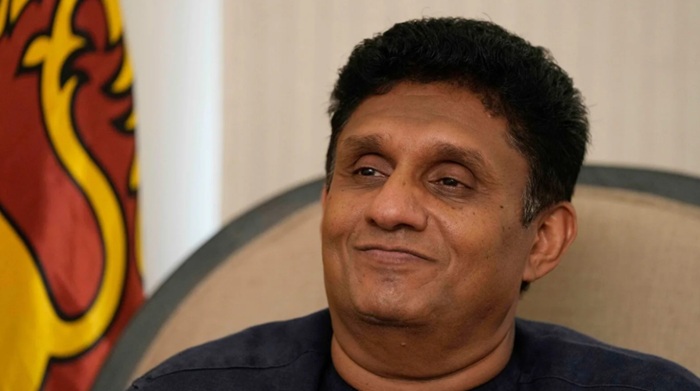
Opposition Leader Sajith Premadasa has urged the government to reduce the sharply increased prices of gas, fuel, and electricity bills and provide a relief package to the public. In a video message, he accused the government of failing to understand the hardships faced by ordinary citizens, noting that the sudden price hikes have placed millions under unbearable pressure. Premadasa pointed out that uncertainty remains over whether the country’s gas requirements are being met by suppliers, while rapid price increases have left people vulnerable. He also highlighted concerns raised in Parliament about disruptions to global fuel and gas supplies due to the Middle East conflict and the closure of the Strait of Hormuz, which the government initially dismissed. Citing examples from countries such as Australia, New Zealand, the UK, South Korea, India, Pakistan, Bangladesh, Malaysia, and Egypt, Premadasa said governments worldwide are offering relief measures to their citizens. He stressed that Sri Lanka’s government should follow suit by introducing a special economic relief package, targeting the poor and middle class rather than the wealthy. Premadasa further pledged that the opposition would support such a package if presented in Parliament, provided it genuinely benefits the people. He added that since the Treasury has reported surplus funds and the International Monetary Fund (IMF) has acknowledged improved revenue, the government should use these resources to reduce gas, fuel, and electricity prices and ensure social justice. “The government’s responsibility is not to burden the people but to help them live,” Premadasa said, calling for immediate action to provide relief to struggling households. (Newswire) 2026-04-06
IMF meets Opposition party leaders; Dilith voices concern over EFF ...
For some reason, other party leaders, including those from the Samagi Jana Balawegaya (SJB) and Sri Lanka Podujana Peramuna (SLPP), were absent, including Opposition Leader Sajith Premadasa. IMF Mission Chief for Sri Lanka Evan Papageorgiou and Sri Lanka Resident Representative Martha Woldemichael, along with other members, were present.
IMF delegation praises Sri Lankan government's austerity measures
The opposition Samagi Jana Balavegaya (SJB) leader Sajith Premadasa, unlike on previous occasions, did not meet the IMF delegation in a cynical attempt to distance himself from its austerity demands.