Vetted by NeuralPress's Multi-Agent Verifier for strict factual validity and event relevance. Our compliance engine cross-checks and filters search results to ensure zero false correlations or misleading content.
Primary Sources
US Launches Mission to Clear Sea Mines in Strategic Strait of Hormuz
(MENAFN) According to reports, U.S. forces have launched a new maritime security operation aimed at clearing naval mines in the highly strategic Strait of Hormuz, a key global shipping route. The operation was described as being carried out by the United States Central Command, with naval assets already active in the area as part of broader efforts to secure safe passage for commercial shipping. Two U.S. Navy guided-missile destroyers, identified as USS Frank E. Peterson and USS Michael Murphy, were reported to have transited the strait and conducted operations in nearby waters. The mission is said to be focused on reducing risks from sea mines allegedly placed in the region by Iran’s Islamic Revolutionary Guard Corps Islamic Revolutionary Guard Corps. Officials involved in the operation stated: “U.S. Central Command (CENTCOM) forces began setting conditions for clearing mines in the Strait of Hormuz, April 11, as two U.S. Navy guided-missile destroyers conducted operations,” CENTCOM said in a statement. The objective, according to military leadership, is to establish a secure maritime corridor and eventually communicate a safe passage route to commercial shipping operators to ensure uninterrupted global trade. As one senior commander described: “Today, we began the process of establishing a new passage and we will share this safe pathway with the maritime industry soon to encourage the free flow of commerce,” Adm. Brad Cooper, commander of CENTCOM, said in the statement. Additional support assets, including underwater drones and other specialized systems, are expected to join the operation in the coming days as the clearance effort expands. Separately, remarks attributed to the President of the Donald Trump indicated that the United States had already initiated steps related to clearing the strait. He stated: "We’re now starting the process of clearing out the Strait of Hormuz as a favor to Countries all over the World, including China, Japan, South Korea, France, Germany, and many others," Trump said, adding all 28 of Iran's mine-laying vessels were "lying at the bottom of the sea." The Strait of Hormuz remains one of the world’s most critical energy transit routes, making any military or security activity in the area closely watched by global markets and shipping stakeholders. MENAFN12042026000045017640ID1110971729 Legal Disclaimer: EIN Presswire provides this news content "as is" without warranty of any kind. We do not accept any responsibility or li...
How the Gulf is redrawing its logistics network to bypass Hormuz
Hormuz crisis: The shift has redrawn parts of the region’s logistics network, moving trade away from the Persian Gulf and towards the Red Sea and the Gulf of Oman.New trucking routes across the Arabian desert have become an emergency trade lifeline for Gulf economies trying to bypass the Strait of Hormuz after the US and Israel attacked Iran, stated a report. Highways, rail links and ports in Saudi Arabia, the United Arab Emirates and Oman are being used to move goods overland as governments and companies adjust to the disruption. As mentioned in a report in Wall Street Journal, the shift has redrawn parts of the region’s logistics network, moving trade away from the Persian Gulf and towards the Red Sea and the Gulf of Oman. The alternative routes cannot match shipping on cost or capacity, and they do not solve shortages of jet fuel and other energy products, but they are keeping some cargo flowing and providing contingency options as US-Iran talks remain deadlocked, it said. MUST READ | India working on ₹40,000 crore deep-sea gas pipeline amid Hormuz crisis: Report At Saudi Arabian state-controlled mining company Maaden, chief executive Bob Wilt sent executives to Red Sea ports after the attacks and, within two weeks, arranged rail and truck operations to move fertilisers across the kingdom, the report stated. The operation relied on large numbers of trucks running almost round the clock with two drivers each. As the effort expanded, Wilt told the American newspaper: "Six hundred became 1,600, became 2,000; now we’ve got 3,500 trucks running from the Gulf to the Red Sea." Shipping groups including MSC and Maersk are also using overland routes across the Arabian peninsula. In one example, UAE supermarket chain Spinneys sent trucks carrying British foods, including potato chips, porridge oats and children’s snacks, on a 16-day journey from Kent through western Europe, then Egypt and Saudi Arabia, to Dubai. According to the report, Etihad Rail Freight also moved hundreds of Nissan vehicles from Fujairah on the UAE’s eastern coast to Abu Dhabi on the Persian Gulf in the country’s first vehicle movement by train. DON'T MISS | $10 trillion chokepoint: Iran now targets undersea cable networks in Strait of Hormuz Moreover, Saudi Aramco has relied heavily on its East-West pipeline to the Red Sea port of Yanbu, while the UAE has pushed more crude through Fujairah. Both countries are looking at ways to expand these links, alongside proposals for new rail line...
Strait of hormuz Articles and latest stories | The Jerusalem Post
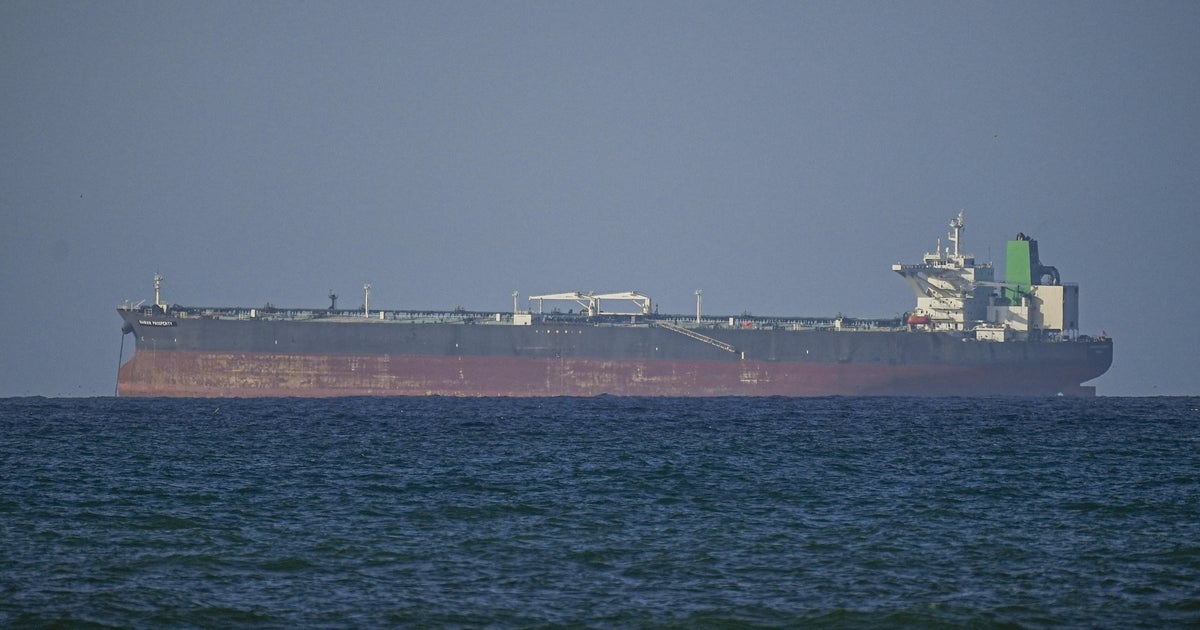
The Chinese supertanker Yuan Hua Hu crosses the Strait of Hormuz after months of delay, carrying nearly 2 million barrels of Iraqi crude, as US-Iran tensions continue to shape the Gulf.
Trump helped turn the Strait of Hormuz into a global crisis—and now ...
It's clear from some of these comments that you folks don't understand what is happening. I would suggest tuning in to some different channels. 13h · 81 likes.