Vetted by NeuralPress's Multi-Agent Verifier for strict factual validity and event relevance. Our compliance engine cross-checks and filters search results to ensure zero false correlations or misleading content.
Primary Sources
Britain is losing the ability to tell anti-Semitism from dissent ...
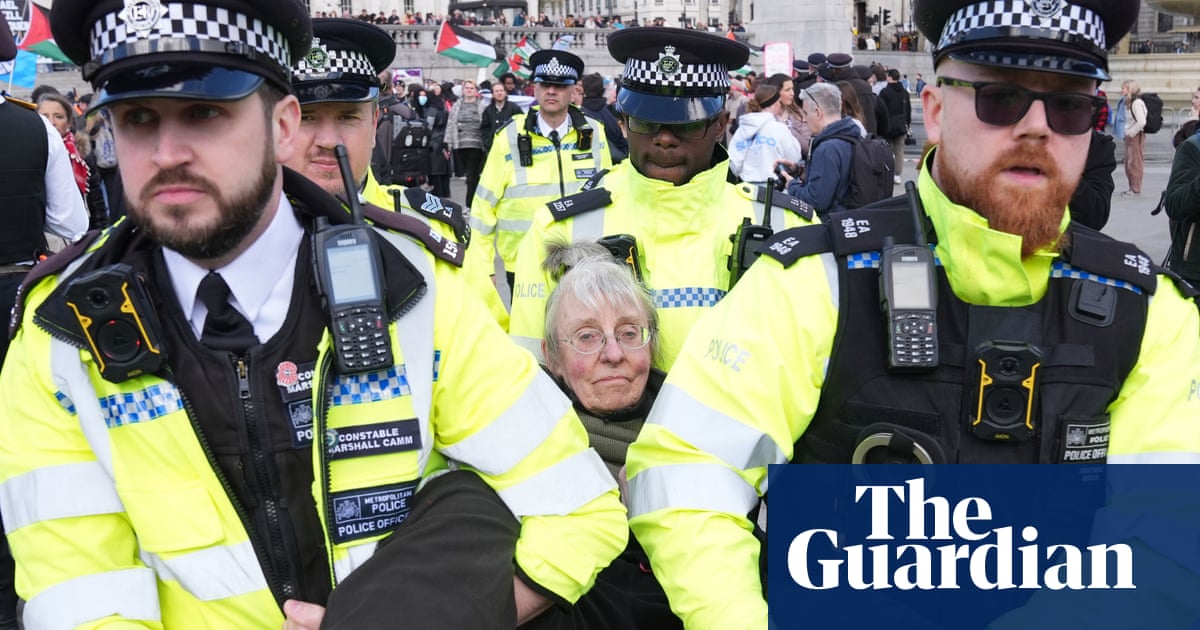
Sir Mark Rowley’s recent comments that some pro-Palestinian demonstrations in London send a message “that feels like anti-Semitism” are the latest sign of a dangerous trend in British public life: the conflation of anti-Semitism with criticism of the Israeli state.The Metropolitan Police commissioner suggested that some protest organisers deliberately route marches near synagogues in ways that intimidate British Jews. Any genuine intimidation of Jewish communities should, of course, be treated seriously. Anti-Semitism is real, dangerous and rising in Britain and across parts of Europe. It must be confronted clearly wherever it appears.But Britain is entering troubling territory when protests against the destruction of Gaza, opposition to Israeli state violence, or expressions of Palestinian grief are treated as inherently suspicious, even anti-Jewish, political acts.The issue is no longer only how Britain combats anti-Semitism. It is whether the country can still distinguish between hatred of Jews and opposition to the policies of the Israeli government.That distinction matters enormously, not only for Palestinians but for Jewish communities, too.For Palestinians, there is something painfully familiar about this moment. Many grew up being told that their dispossession was tragic but necessary; that the destruction of their villages, the loss of their homes and their transformation into refugees were justified by somebody else’s need for safety and statehood.Entire generations of Palestinians were raised inside this logic. Their catastrophe was acknowledged only insofar as it remained secondary to another historical trauma. In much of the Western imagination, Palestinian suffering occupied a different moral category: visible enough to be discussed, but rarely enough to disturb political comfort.Now, as Gaza continues to be devastated before the eyes of the world, Palestinians in Britain and across the West are finding that even speaking about their grief, anger and loss is increasingly treated as a source of discomfort requiring management.For more than two and a half years, the world has witnessed scenes from Gaza that many legal experts, human rights organisations and genocide scholars have described using words once reserved for history books: ethnic cleansing, collective punishment, extermination and genocide.Entire neighbourhoods have been erased. Families wiped out. Hospitals bombed. Journalists killed. Civilians starved under siege. Children pulled l...
The situation is so bad in Britain, even a rally against antisemitism ...
Have you ever heard of a rally where a massive police presence was needed to protect the protestors instead of managing them? Have you ever heard of a rally requiring airport-style security with metal detectors and bag searches? What about metal bollards to prevent car rammings? This was what it took to hold a solidarity rally for British Jews. If you want a single image that captures the state of antisemitism in once-tolerant Britain, it was the queue to get through security at “Britain Stands with British Jews.” With antisemites kept away by the huge security presence, the counter-protest amounted to a lone antizionist Jew standing on the pavement near the security gates, holding a placard extolling the virtues of antizionism. No one was shouting at him. They looked at him in disbelief and muttered amongst themselves. Then a woman walked up, holding a placard of her own – “Antizionism Is Racism.” She knew him. She treated him warmly, asked how he was. “What are you doing here?” he asked. She showed him her placard and his demeanour changed. “Can I give you a hug?” she asked. “No,” he answered. She shrugged, told him to take care, and walked off. The Chief Rabbi opened proceedings with a rousing speech, calling for the banning of the IRGC and the expulsion of the Iranian ambassador to rapturous applause. Then came Pat McFadden, the work and pensions secretary – a man most people didn't recognise. He had been sent by a government that has failed the Jewish community, and couldn't even muster a big name to represent them. McFadden spoke quietly. It was the voice of a man who knew that he had been sent as fodder to the front line. The boos rang out. But as his speech went on – particularly further back where he could be heard better – applause began drowning out the booing, most notably when he promised to fast track prosecutions and ban hate preachers. It could have been a lot worse. Kemi Badenoch received a very warm reception. She has been an outspoken supporter of the community at a time when many were scared to speak out. Lib Dem leader Ed Davey appeared to howls of jeering laughter – a leader whose inflammatory positions on Israel had real-life consequences for British Jews. But he showed up and faced the music, and his speech was well received.To get more from opinion, click here to sign up for our free Editor's Picks newsletter.
Prince Harry speaks out on 'deeply troubling' antisemitism in Britain
Prince Harry has spoken out about antisemitism in Britain and claims he has learned from his own 'past mistakes' - decades after wearing a Nazi uniform to a party. A wave of recent antisemitic attacks have targeted the Jewish community prompting calls to ban pro-Palestine 'hate marches' and police forces to bolster their enforcement teams.
Building a strategic response to antisemitism in the UK in a changing ...
Towards a strategic response to the lifecycle of antisemitism The proposals below provide a framework for both responding to antisemitic violence and building an integrated strategy which incorporates the range of harms from antisemitism impacting British Jews.