Vetted by NeuralPress's Multi-Agent Verifier for strict factual validity and event relevance. Our compliance engine cross-checks and filters search results to ensure zero false correlations or misleading content.
Primary Sources
Proposed amendments to Inland Revenue Bill sparks fear over ...
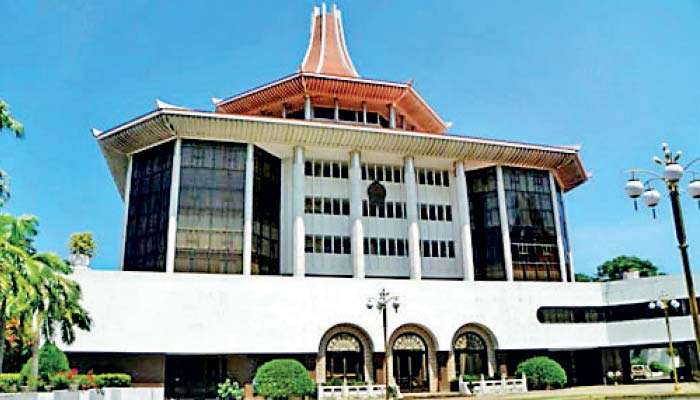
By The Pulseline News Desk A controversial provision in Sri Lanka’s proposed Inland Revenue (Amendment) Bill 2026 has triggered growing concern among legal experts, tax professionals, and constitutional observers, who warn that the legislation could significantly expand State power by turning administrative tax failures into criminal offences. At the centre of the debate is the proposed Section 185A, a clause critics argue represents more than a technical tax reform. They say it marks a deeper shift in the philosophy of governance – one that risks weakening democratic safeguards in the name of enforcement efficiency. The provision would reportedly allow criminal sanctions, including fines and imprisonment, for failures such as non-registration, failure to file tax returns, failure to submit required statements, or failure to appear before tax authorities when notified. Opponents argue the danger lies not only in the penalties themselves, but in the broad nature of the offence. The central concern is that the proposed law appears to criminalise procedural non-compliance even where there is no fraudulent intent, concealment, deception, or deliberate tax evasion. Legal analysts say that departs from one of the foundational principles of criminal law – that criminal punishment should generally require mens rea, or a guilty state of mind. “This is not a minor drafting amendment,” one constitutional lawyer familiar with the Supreme Court petitions has noted. “It is a philosophical change in how the State relates to citizens.” The controversy has already escalated into constitutional litigation before the Supreme Court under Article 121 of the Constitution. From administrative error to criminal liability Critics argue that in most mature democratic systems, procedural tax failures are treated primarily as civil or administrative matters handled through penalties, interest, negotiated settlements, compliance mechanisms, or rectification procedures. Criminal prosecution, they note, is generally reserved for deliberate fraud, concealment, falsification, money laundering, obstruction, or systematic tax evasion. The distinction, observers say, is critical. Because once procedural mistakes become criminal offences, ordinary citizens and businesses may become vulnerable to coercive enforcement and selective targeting. “A delayed filing can become leverage. An administrative omission can become a criminal file. A technical breach can become a political weap...
Government welcomes passage of Inland Revenue (Amendment) (Tax ...
Government welcomes passage of Inland Revenue (Amendment) (Tax Concessions, Concessionary Deductions and Allowances) Bill 2026 *************************************************************** The Government welcomed the passage of the Inland Revenue (Amendment) (Tax Concessions, Concessionary Deductions and Allowances) Bill 2026 by the Legislative Council today (May 13) to implement the concessionary tax measures proposed in the 2025 Policy Address and the 2026-27 Budget. A Government spokesperson said, "The measures include increasing the basic allowance, married person's allowance, single parent allowance, basic and additional child allowance, basic and additional allowance for dependent parent/grandparent and the deduction ceiling for elderly residential care expenses, as well as extending the claim period for additional child allowance for newborns starting from the year of assessment 2026/27. About 2.09 million taxpayers will benefit, reducing tax revenue by about $5.51 billion per year. "The measures also include a one-off 100 per cent reduction of salaries tax, tax under personal assessment and profits tax for the year of assessment 2025/26, subject to a ceiling of $3,000 per case. It is expected to benefit about 2.12 million taxpayers and 170 000 businesses, with about 24 per cent of the taxpayers and 18 per cent of the businesses not needing to pay tax for the year of assessment 2025/26. The government revenue will be reduced by about $5.78 billion." The above legislation as passed will be gazetted on May 22. The one-off tax concessions, increased allowances and deduction ceilings will be reflected in taxpayers' final tax payable for the year of assessment 2025/26 and the tax payable for the year of assessment 2026/27 respectively. Ends/Wednesday, May 13, 2026Issued at HKT 15:36 NNNN
Inland Revenue (Amendment) Bill takes centre stage in Parliament ...
Parliament is scheduled to meet from May 19 to 22, Acting Secretary-General of Parliament Hansa Abeyrathne said.The parliamentary agenda for the four sitting days was decided at the Committee on Parliamentary Business meeting held under the chairmanship of Deputy Speaker Rizvie Salih. Accordingly, on each sitting day, the time from 9.30 am to 10 am […]
Second Reading debate on Inland Revenue (Amendment) Bill in ... - Adaderana
Accordingly, on May 19, the Second Reading debate on the Inland Revenue (Amendment) Bill is scheduled to be held while on May 20, the Adjournment Debate will be held on the report of the Annual Economic Review of the Central Bank of Sri Lanka for the year 2025, based on a motion moved by the government.