Vetted by NeuralPress's Multi-Agent Verifier for strict factual validity and event relevance. Our compliance engine cross-checks and filters search results to ensure zero false correlations or misleading content.
Projected National Fuel Bill (2026)
Rising fuel costs in USD millions between February and May 2026.
Primary Sources
Ominous signs on economic front - The Island
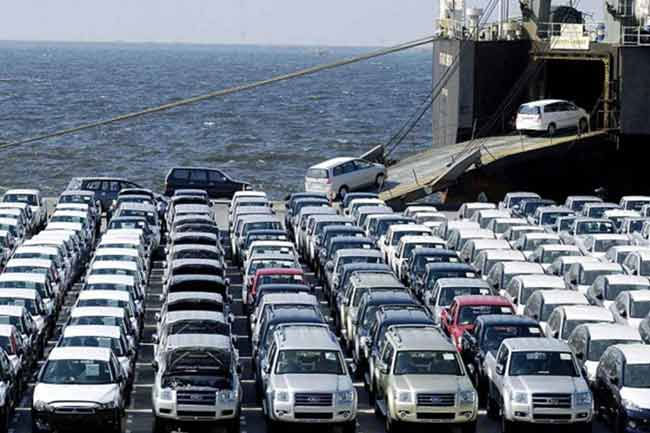
Share Tweet Monday 18th May, 2026 The government has realised the need for a decisive intervention to curtail the burgeoning import bill, which is a drain on the country’s foreign currency reserves. It has imposed a 50% surcharge on custom duty on vehicle imports for three months. Vehicle prices are bound to increase substantially. Explaining why the government decided to impose a duty surcharge on imported vehicles, Deputy Minister of Finance and Planning Dr. Anil Jayantha Fernando has said import expenditure has increased sharply to USD 2 billion over the past two months. Letters of Credit for vehicle imports are also being opened rapidly, and therefore instead of banning vehicle imports, the government decided to impose a duty surcharge to manage the situation, he has stated, requesting that the importation of vehicles for personal use be postponed by three months. It became clear a few months ago that the sheer volume of vehicle imports would pressure foreign currency reserves. The government moved to boost its tax revenue by lifting restrictions on vehicle imports in keeping with IMF conditions, but it apparently did not maintain a balance between higher taxes on imported vehicles and foreign currency reserves. Perhaps, having claimed that it strengthened the economy and built foreign currency reserves, the government did not want to restrict vehicle imports. Oil accounts for about 20% of Sri Lanka’s import bill, and therefore a strategy to curtail the foreign exchange outflow consists in reducing fuel consumption. The West Asia crisis has driven the global oil prices up and left the developing economies struggling. President Anura Kumara Dissanayake has recently lamented that the national fuel bill increased steeply from USD 98 million in February to USD 368 in April, and the projected bill for May is USD 522 million. He has stressed the need to reduce fuel consumption. This situation has come about due to global oil price hikes caused by the Iran conflict rather than an increase in the fuel consumption by the public. However, there has been a massive increase in fuel imports for power generation. What the President has left unsaid is that fuel imports have increased because oil-fired power plants have to operate to meet a generation shortfall at Norochcholai, caused by low-quality coal imports. Experts have pointed out that about 800,000 litres of diesel have to be burnt daily to compensate for the Norochcholai generation loss. Strangely, no one h...
World Economy - Latest News, Investigations and Analysis
7:18WSJ Opinion: What Happens When Europeans Find Out How Poor They Are?Political Economics: Europe trails far behind U.S. economic output. Politics is bound to catch up sooner or later. Photo: Storyblocks8:39Salesforce CEO Marc Benioff on the Rise of the “Agentic Enterprise”Marc Benioff, Salesforce co-founder and CEO, speaks with WSJ Leadership Institute President Alan Murray in Davos as AI agents begin to change the way companies operate. He says businesses may soon be “kind of running themselves.” Benioff also reflects on why this year’s Davos marks a turning point for business, technology, and geopolitics. Photo: Michael Claudio/WSJ5:54Accenture CEO Julie Sweet: This Is Where AI Delivers the Biggest Payoff Julie Sweet, CEO of Accenture, speaks with WSJ Leadership Institute President Alan Murray in Davos about why most companies are still years away from enterprise-wide AI transformation—and why CEOs are now moving away from using AI solely as a cost-cutting tool toward a much bigger opportunity. Photo: Michael Claudio/WSJ6:03Davos CEO Brief Sponsor Bain CEO: What CEOs Must Do Now to Lead Through AI and Geopolitical ChangeChristophe De Vusser, Bain CEO and Worldwide Managing Partner, speaks with WSJ Leadership Institute President Alan Murray in Davos about why AI must be treated as a full business transformation—not a pilot project. He also explains how CEOs should provide clear leadership, motivate their teams, and make big strategic decisions as geopolitical shifts reshape businesses and the global economy. Disclosure: Bain is a sponsor of the WSJLI Davos CEO Brief. Photo: Michael Claudio/WSJ33:09WSJ Recaps the 2026 World Economic ForumA panel of Wall Street Journal editors discuss the major themes of Davos 2026, including geopolitical tensions between Europe and the U.S., the promise and anxiety of AI, crypto regulation, and China's rising influence and the end of globalization consensus. Photo: Maurizio Martorana for WSJ
Wholesale Prices Jumped in April, in Latest Sign of War's Economic ...
Wholesale prices in April rose at their fastest rate in four years, the latest sign that the war with Iran is taking a toll on the U.S. economy. The Producer Price Index, a measure of the costs ...
Another Ominous Sign for US Economy as Wholesale Inflation Soars
Another Ominous Sign for US Economy as Wholesale Inflation Soars Bret Hartman By Michael Rainey Wednesday, May 13, 2026