Vetted by NeuralPress's Multi-Agent Verifier for strict factual validity and event relevance. Our compliance engine cross-checks and filters search results to ensure zero false correlations or misleading content.
Primary Sources
The need of a new paradigm in agriculture - The Island
Palm leaf manuscripts are now valued as historical documents and collections of palm leaf manuscripts are carefully preserved in libraries, in Sri Lanka and abroad. Most of the palm leaf manuscripts available in these collections date only from the 18th and 19th century. The palm leaf is a perishable item. Manuscripts of an earlier period are rare and are greatly valued. Sri Lanka has the greatest number of these palm leaf manuscript collections. This indicates the value placed on palm leaf manuscripts in this country. The largest collection in Sri Lanka and possibly in the world, is in the National Museum Library, Colombo. The collection exceeds 5000. It includes the collections of H.C.P. Bell, W.A. de Silva, Ananda Coomaraswamy and E.B Gunaratne as well as the poetry section of the Hugh Neville collection. In 1938, W.A. de Silva prepared a “Catalogue of palm leaf manuscripts in the Library of the Colombo Museum.” This was published by the Museum. The Museum library has the oldest palm leaf manuscript in the country, the Cullavagga, dated to 13 century. Cullavagga gives an account of the religious life of the sangha and the legal confines of their conduct. The last chapter carries the earliest known account of the Buddhist Great Council at Rajagaha. The library has a copy of Buddhaghosa’s commentary on Digha nikaya. The cover is of silver embossed with white sapphires. The library has a copy of Sumangala Vilasini , one of the Bodhiwamsa (Ref No 1823) in Sinhala giving the history of the Sri Maha Bodhi, and the Mahavagga, copied by the Peramuna rala of Siyambalapitiya Galboda korale, completed on October 1802 and offered to Malwatte. The Museum library has approximately 300 medical manuscripts Saddharmaratnavaliya manuscript says that doctors had to be paid for their services and travelling expenses. It said that physicians jealously guarded their knowledge of medicine and kept their prescriptions for medical remedies in safe custody. University of Peradeniya has the next largest collection of 4000 items. Peradeniya has the UNESCO recognised copy of the Mahavamsa and the 13 century Visuddhi Magga Tika. The library has the de Saram and Hettiarachchy collections and several collections of palm leaf manuscripts donated to it.When I was studying at Peradeniya in the 1960s, the Main Library displayed palm leaf manuscripts and their decorative covers, in a case, upstairs, by the staircase, where the readers would not miss it. That was our introduction to palm le...
The need of a new paradigm in agriculture. - LinkedIn
Traditional Rice Fields Ranil Senanayake Ranil Senanayake Published May 16, 2026 Agriculture or the production of food has framed the history of social development through millenia. Honed over centuries of tending to a land and its soils, a traditional understanding of a crop and its needs is what the phenomenon of agriculture produced. Sri Lanka provides a good example. Here, irrigated rice production demonstrates a sophisticated system of water collection and control. The rice farming landscape maintained a high biodiversity component, that had co-evolved with the management cycles of the land. The grain itself was not only a source of carbohydrate, but also a source of selected minerals and nutritional compounds, as seen in the variety and composition of the grain. At the last reckoning (1950), there were 500 named varieties each with different, color, shape and texture complexes, that were recorded. This diversity was the first victims to the industrialization of agriculture. Today it is difficult to find more than 20 that remain within the farming communities. In traditional farming systems, farming demanded a knowledge of the environment. A farmer, to be successful required an intimate knowledge of the land and the changes that seasonality brought to it. There was always the drive to produce more but productivity of the traditional system, was limited to the optimal biological energy. In terms of energy, it was always internal, the soil, farm livestock and the farmers’ energy to produce food. In Rice production, this system was recorded to have a yield of about 2000 kg per hectare around 1960. With the onset of agricultural development focused on productivity, this level of yield was seen to be insufficient and an agricultural development program that focused on crop intensification began. The changes began with the introduction of hybrids and artificial fertilizer. Under this approach crop plants were bred to have smaller leaf and root biomass and the production was concentrated in harvestable biomass. One problem with this approach, is that while it takes a smaller root mass to absorb the fertilizer efficiently there are no other roots extending outwards, providing root exudates into the soil microbial community to keep the soil alive. The fossil based fertilizer are salts that are taken by the plant to create rapid growth. But such growth is at the expense of its natural defenses, bringing about attacks by pests which then have to be controlle...
Strengthening service and knowledge systems as pathways for ... - Nature
Agroecology as a convergent paradigm The United Nations Food and Agriculture Organization (FAO) defines agroecology (AE) as a holistic and integrated approach that simultaneously applies ...
The Modern Farmer: Technology, Sustainability & Challenges in Agriculture
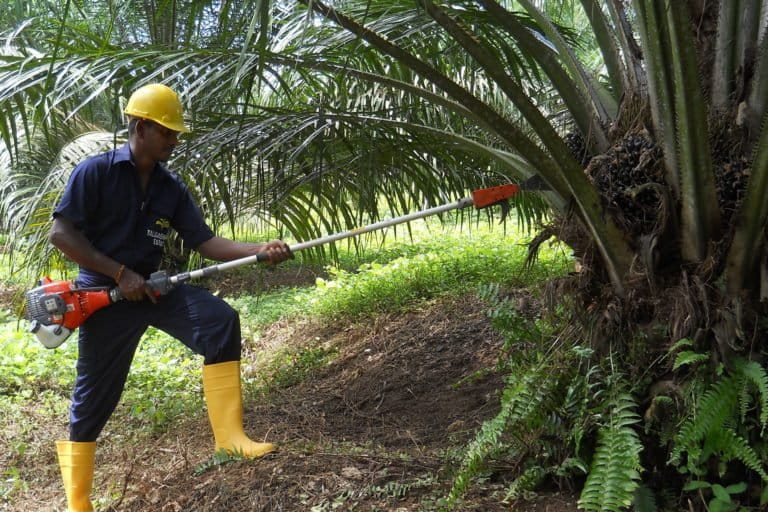
Mechanization revolutionized agriculture in the 20th century, replacing manual labor with tractors, harvesters, and automated systems. Now, a new wave of innovation is reshaping the industry once again. Precision agriculture, for example, uses GPS, drones, and sensors to optimize planting, watering, and harvesting.