Vetted by NeuralPress's Multi-Agent Verifier for strict factual validity and event relevance. Our compliance engine cross-checks and filters search results to ensure zero false correlations or misleading content, in full compliance with the Online Safety Act of Sri Lanka.
Primary Sources
Inside the Race to Develop a Test for the Rare Andes Hantavirus
As passengers return to the US from the cruise that saw a rare hantavirus outbreak, much of the country is lacking a basic public health tool: a test to diagnose the illness in the earliest stages of infection. Nebraska may be the first state with the ability to do so. In just a few days, a lab at the University of Nebraska Medical Center in Omaha developed its own diagnostic test for the Andes virus in anticipation of receiving 16 American passengers from the ship. “I believe we might be the only lab in the nation that has this test available at the moment,” Peter Iwen, director of the Nebraska Public Health Laboratory tells WIRED, referring to polymerase chain reaction (PCR) testing, which was important during the Covid-19 pandemic. Its ability to detect tiny quantities of the virus before patients have full-blown symptoms makes it crucial for identifying cases quickly, getting patients prompt medical treatment, and preventing the spread of disease. The university’s medical center is home to a highly specialized biocontainment unit designed to care for patients with severe infectious diseases that lack vaccines or treatments. Staff members previously treated patients during the 2014 Ebola outbreak and cared for some of the first Americans diagnosed with Covid in 2020. When Nebraska was notified that it would be receiving some of the passengers, Iwen contacted the US Centers for Disease Control and Prevention to see if it had tests on hand. He learned that the CDC has the ability to run a serological test, which looks for the presence of hantavirus antibodies. But people don’t develop antibodies until they are actively sick and their body has had time to mount an immune response. Andrew Nixon, a spokesperson for the US Department of Health and Human Services, told WIRED that the CDC has a PCR test for the Andes virus but that it’s a research test that cannot be used for patient management. Research tests are used in scientific experiments, while diagnostic tests that are meant to confirm or rule out a disease in patients need to be rigorously tested, or validated, to make sure they are capable of producing consistent results. Nixon said the agency is working on validating its PCR test. Iwen’s lab mobilized quickly to track down the materials needed to build and validate a PCR test from scratch. They called a lab in California—a state that has previously seen hantavirus cases—but their test was for a specific strain found in the US. Andes virus has previou...
Hantavirus FAQ: Could the Andes strain cause the next pandemic?
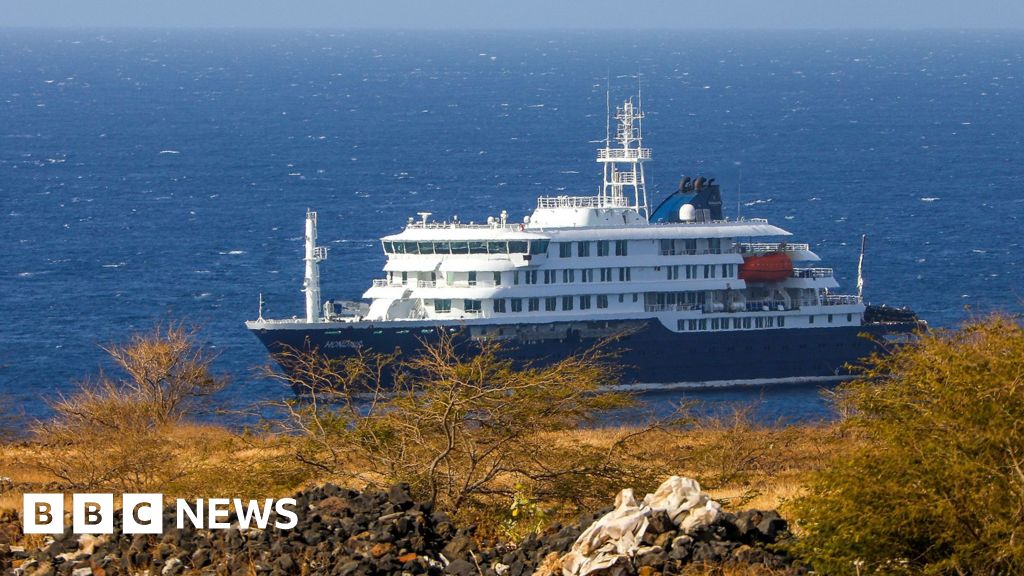
Share on PinterestThis aerial view shows health personnel assisting patients onto a boat from the cruise ship MV Hondius, while stationary off the port of Praia, the capital of Cape Verde, on May 6, 2026. AFP via Getty ImagesA rare hantavirus outbreak has affected a cruise ship carrying nearly 150 people who were travelling from Argentina on a long-haul Atlantic journey.With a few confirmed deaths so far, several countries have ordered tracking and self-isolation for people at risk of suspected infection.However, the WHO currently maintains that the risk of human-to-human transmission and global spread is ‘low’ and the outbreak is under monitoring.Medical News Today spoke to three experts to find out what symptoms to watch out for, when to seek care, and what to do if they suspect contact with the hantavirus.With international contact tracing efforts underway to track the passengers who disembarked the Dutch-flagged cruise ship MV Hondius early, concerns among the public about a larger outbreak of hantavirus have been growing.What began with the confirmed death of a 70-year-old Dutch male onboard the cruise ship has become a hantavirus outbreak that has now spread to several passengers, with multiple in critical condition. That death marked the “index case” of the hantavirus outbreak, currently unfolding.The ship, operated by Oceanwide Expeditions, was initially held off the coast of Cape Verde, and later authorized to sail toward the Canary Islands in Spain for further investigation.Medical News Today spoke to three medical experts to learn more about how this virus spreads, what people can do to protect themselves, and whether this outbreak has the potential to turn into a bigger epidemic, similar to SARS-CoV-2:William Schaffner, MD, professor of preventive medicine in the Department of Health Policy, and professor of medicine in the Division of Infectious Diseases at Vanderbilt University Medical CenterJustin Chan, MD, infectious diseases specialist at NYU Langone Health and Director of Infection Prevention and Control at Bellevue Hospital Centerand Monica Gandhi, MD, MPH, an infectious diseases specialist with the University of California, San Francisco.The Dutch man who died on April 11, 2026 aboard the MV Hondius had started to exhibit symptoms on April 6. This was 5 days after the ship had departed from Ushuaia, Argentina.As of May 11, 2026, there are at least 7 reported cases of confirmed patients. Three people, including the wife of the first vict...
Race to contain deadly hantavirus outbreak - Facebook
While exceptionally rare, one specific strain—the Andes virus in South America—has documented cases of person-to-person transmission, usually requiring very ...

The rare Andes hantavirus outbreak has renewed global ... - Instagram
Experts warn that humans may not even need direct contact with infected animals — simply inhaling contaminated airborne particles from rodent droppings or urine ...