Vetted by NeuralPress's Multi-Agent Verifier for strict factual validity and event relevance. Our compliance engine cross-checks and filters search results to ensure zero false correlations or misleading content, in full compliance with the Online Safety Act of Sri Lanka.
Antibiotic Target Effectiveness
Comparison of effectiveness of scorpion-derived molecules against various bacteria.
Primary Sources
Mexico Turns Scorpion Venom and Habanero Heat Against Killer Superbugs
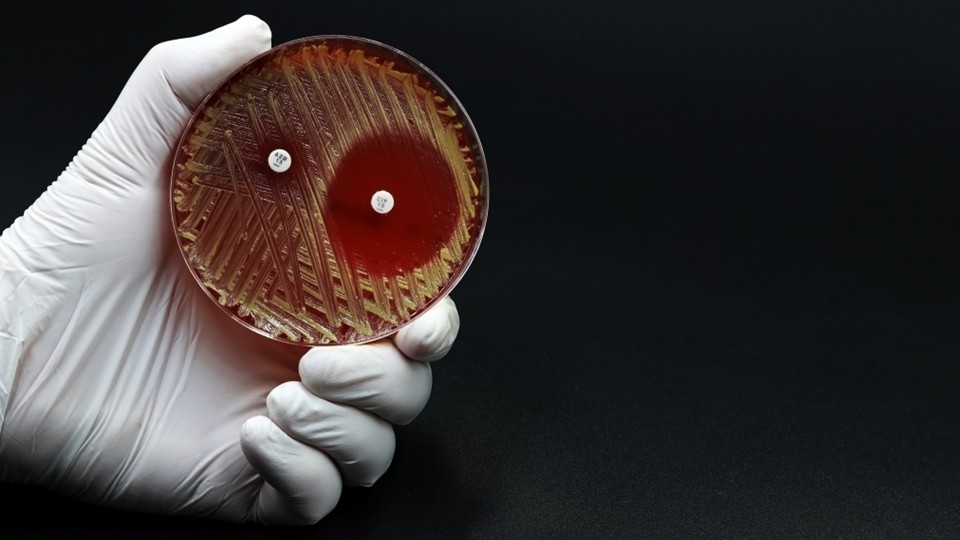
Mexican scientists are turning scorpion venom and habanero peptides into experimental antibiotics, a laboratory hunt with true crime stakes as tuberculosis, hospital infections, and resistant bacteria expose how Latin America must fight killers too small to see before they spread. A Killer Hiding in the Ward The suspect is ancient, patient, and almost invisible. It moves through lungs, wounds, hospital rooms, and weakened bodies. It does not need a gun, a cartel road, or a dark alley. It only needs time, delay, and a medicine cabinet that no longer works. In Mexico, scientists at the National Autonomous University of Mexico (UNAM) have identified new routes to fight tuberculosis and reduce bacterial resistance through three experimental antibiotics derived from scorpion venom and habanero chili. Wired reported the findings, which place Mexican biotechnology inside one of the most urgent global crime scenes of modern medicine: the rise of bacteria that survive the drugs built to kill them. The team led by Lourival Domingos Possani Postay of UNAM’s Biotechnology Institute in Morelos developed two compounds that showed activity against Mycobacterium tuberculosis, the bacterium that causes tuberculosis, and Staphylococcus aureus. This hospital-associated microorganism can cause skin infections, pneumonia, meningitis, septicemia, and endocarditis. Those names may sound clinical, but they belong to a grim roster. Tuberculosis is one of humanity’s old assassins. Staphylococcus aureus is the kind of opportunist that can turn a routine hospital stay into a fight for life. Acinetobacter baumannii, another bacterium later targeted by the same blue molecule, is notorious for resistance to treatment and for causing blood, urinary tract, lung, and wound infections, especially in hospitals. The discovery’s strange source gives the story its Latin American pulse. The compounds came from the venom of Diplocentrus melici, a scorpion native to Veracruz. From that toxin, the scientists isolated two colorless molecules, benzoquinones. When exposed to air, they oxidize and change color. One turns blue. The other turns red. It sounds almost folkloric, a creature of the earth, yielding a blue-and-red clue against invisible killers. But the color shift allowed researchers to determine the molecules’ chemical structure, synthesize them in the laboratory, and test their biological properties. Diplocentrus melici scorpion. UNAM Venom Becomes Evidence According to Wired’s re...
Antibiotic resistance | Definition, Mechanisms, Examples, & Facts ...
News • Top Questions What are antibiotics? How do antibiotics help treat infections? What is antibiotic resistance? How do bacteria become resistant to antibiotics? Why is antibiotic resistance a problem for medicine? What can people and doctors do to help prevent antibiotic resistance? antibiotic resistance, loss of susceptibility of bacteria to the killing (bacteriocidal) or growth-inhibiting (bacteriostatic) properties of an antibiotic agent. When a resistant strain of bacteria is the dominant strain in an infection, the infection may be untreatable and life-threatening. Examples of bacteria that are resistant to antibiotics include methicillin-resistant Staphylococcus aureus (MRSA), penicillin-resistant Enterococcus, and multidrug-resistant Mycobacterium tuberculosis (MDR-TB), which is resistant to two tuberculosis drugs, isoniazid and rifampicin. MDR-TB is particularly dangerous because it can give rise to extensively drug-resistant M. tuberculosis (XDR-TB), which requires aggressive treatment using a combination of five different drugs.The potential for antibiotic resistance was recognized in the early 1940s, almost immediately after the first large-scale clinical applications of penicillin, the first antibiotic. Mass production of penicillin was part of the greater war effort of World War II, when the drug was used widely by military populations and by some small civilian populations. Along with penicillin’s effectiveness in the treatment of the wounded, the drug was lauded for lowering the rate of venereal disease among military personnel, since it was particularly potent against the bacterial organisms notorious for causing syphilis and gonorrhea. However, even before the war had ended, resistance to penicillin was already reported—first in 1940 by British biochemists Sir Ernst Boris Chain and Sir Edward Penley Abraham, who published a report about an enzyme capable of destroying penicillin, and again in 1944 by several scientists working independently, who reported a penicillin-inactivating enzyme that was secreted by certain bacteria. In the following decades, overuse and repeated exposure to antibiotic agents favoured the selection and replication of numerous strains of antibiotic-resistant bacteria. mechanisms of antibiotic resistance in bacteriaThere are multiple mechanisms by which bacteria can develop resistance to antibiotics. Examples include the activation of drug efflux pumps that actively remove a drug from the cell, the inacti...
Natural antibiotics that our ancestors used instead of pills - Facebook
... immune system. The active ingredient in garlic, allicin, is the key component to killing and warding off harmful bacteria. Crush it to activate these ...
Understanding Bacterial Death: The Impact of Temperature - Once In A ...
Understanding Bacterial Death: The Impact of Temperature Temperature plays a crucial role in determining the survival and growth of bacteria. Different bacteria species have varying temperature tolerances, and understanding these thresholds is essential for food safety, medical sterilization, and overall hygiene practices.