Vetted by NeuralPress's Multi-Agent Verifier for strict factual validity and event relevance. Our compliance engine cross-checks and filters search results to ensure zero false correlations or misleading content.
Primary Sources
How the Far Right Got its Name - Al Jazeera
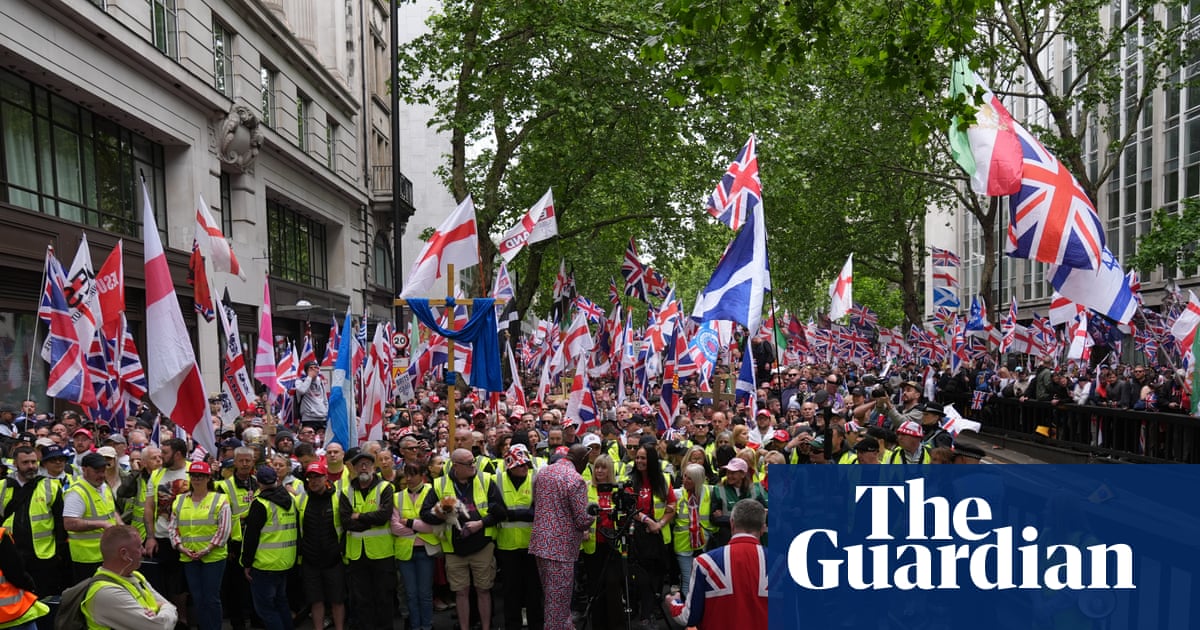
A Golden Dawn supporter raises his hand in a Nazi-style salute during a rally in Athens in 2014 [Yannis Kolesidis/AP Photo]A Golden Dawn supporter raises his hand in a Nazi-style salute during a rally in Athens in 2014 [Yannis Kolesidis/AP Photo]Published On 15 May 2026On Saturday, tens of thousands of anti-immigration protesters are expected to march through the streets of London under the banner “Unite the Kingdom”.Leading it will be Stephen Yaxley-Lennon, known as Tommy Robinson, the oft-described combative Luton-born, anti-Islam activist who has long rejected the label “far right”. He frames himself instead as a defender of free speech and as a patriot.Robinson’s supporters have turned the denial into a rallying cry of their own, often carrying banners that say “We’re not far right, just right”.But academics who have spent years studying the anatomy of far-right movements and organisations like HOPE not hate - which track the far right closely - tell a different story.Their argument is not simply about Robinson; it is about the term itself, because “far right” is not a precise classification. Its meaning shifts depending on who uses it, and that ambiguity is something individuals like Robinson have learned to exploit.Understanding the label before one uses it is important, experts say. Applying it loosely to moderate views risks sanitising the far right. And when actors who do meet the scholarly definition successfully reject the label, their politics can appear more palatable than they should.While today’s debates often centre on figures like Robinson, the modern use of “far right” has deeper roots in European political history.Stephen Yaxley-Lennon, also known as Tommy Robinson, speaks to supporters and members of the media as he leaves Southwark Crown Court in London, on July 3, 2025 [Leon Neal/Getty Images]The rise of the far right in EuropeAs European election results lit up television maps on June 17, 1984, the mood of election-night commentary shifted from routine to disbelief. Returns poured in from across France, defying expectations, especially for one party.That party was the National Front (FN), led by Jean-Marie Le Pen, a combative former paratrooper widely described at the time as part of the “extreme droite” - the far right.The label “extreme droite” emerged in French political language and was often used to describe a political conservatism focused on ethnic nationalism, anti-Semitism, and anti-republicanism.Founded in 1972, the FN pull...
Far-right populism in Europe - dw.com
Across the continent, far-right movements are growing in influence. In Italy and Finland they have recently entered government, while in several others — like Germany, Spain and France — they are polling strongly.
Life inside the online far right, and why one woman walked away
Culture Life inside the online far right, and why one woman walked away A decade in conservative media left Lauren Southern questioning the beliefs and incentives that shaped her career by Alexandra Keeler May 11, 2026
Berlin: Fighting the city's young far-right scene - DW.com
... a result has found herself facing hostility from right-wing extremists — which is why DW is not using her real name. The 30-year-old keeps track of the far- ...