Vetted by NeuralPress's Multi-Agent Verifier for strict factual validity and event relevance. Our compliance engine cross-checks and filters search results to ensure zero false correlations or misleading content.
Primary Sources
The Stages of Imperial Decline - by Arie van Gemeren, CFA
“The fall of empires is never a single event. It is a sequence — and the sequence rhymes.”Every generation believes its empire is different. That the sun will never set on this iteration of glory. This essay is not a prediction. I don’t have that level of pride or ego to think I can predict these things. But history does rhyme, and there are observable patterns. Over the last year of writing at The Timeless Investor, I’ve profiled these four empires in pieces — the Roman grain dole, Spain’s silver-financed self-destruction, the Ming monetary collapse, Britain’s slow abdication. What I have not done, until now, is put them side by side.When you do, a structure emerges. Four stages. The same four, every time. And when you hold that framework up to the United States in 2026, the honest answer is not collapse is coming — the honest answer is more uncomfortable than that.The honest answer is: we are somewhere in the middle of the sequence, and the question is not whether the pattern applies but whether we can be the first great power in recorded history to break it.Which, as history will show, there’s almost no chance of. Let me show you what I mean.Let’s strip away the togas and galleons and Imperial Dreadnoughts, and focus on the stages. And every imperial decline in history seems to follow a very similar path, roughly in order, and sometimes overlapping: Fiscal Overreach — The empire’s commitments outgrow its tax base. Entitlements, military expenditures, and subsidies to favored constituencies expand during periods of abundance and prove politically impossible to retract when abundance fades.Currency Debasement & Financial Engineering — Rather than raise taxes (politically suicidal) or cut spending (also politically suicidal), the empire reaches for the monetary lever. Coins get clipped. Silver content drops. Paper is printed. Financial innovation papers over fiscal arithmetic.Imperial Sprawl & Military Overextension — Commitments made at the height of power persist long after the underlying economic base can sustain them. Every colony, every garrison, every treaty becomes a permanent liability.Internal Legitimacy Crisis — When stages 1–3 produce visible distress (inflation, inequality, stagnation), the empire responds not with structural reform but with edicts, price controls, scapegoating, and institutional decay. The state loses the trust of its own citizens before it loses to any external rival.That’s the whole framework. Four stages. Hold it loosely — ...
Why The Collapse of the United States Empire Should Inspire Hope
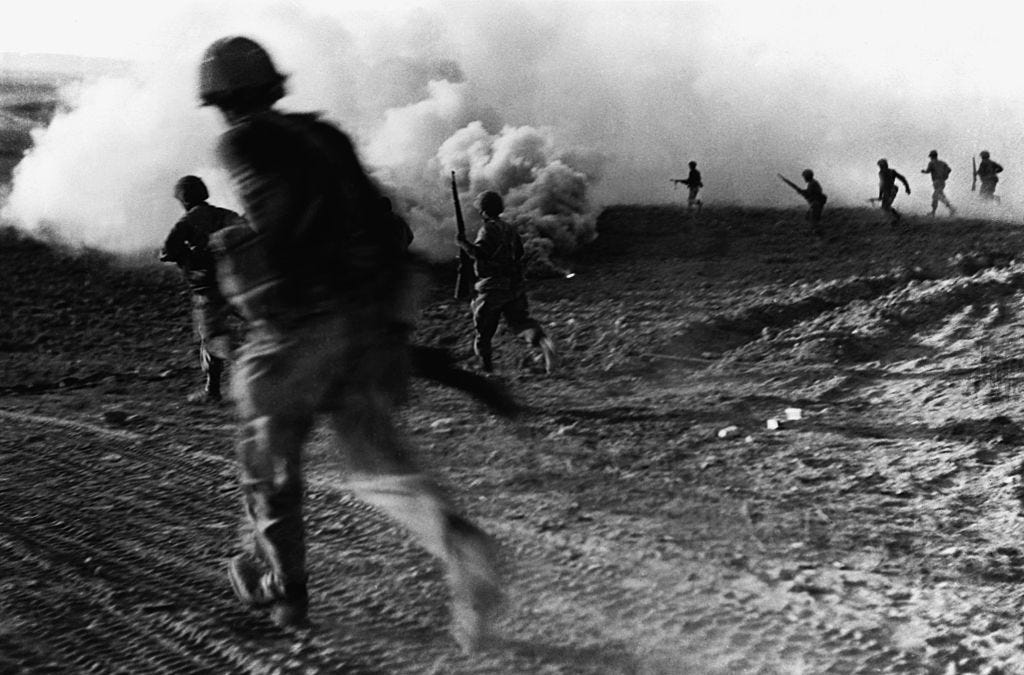
Right now, life feels very hectic. With the prices of everything rising, hundreds of thousands of Black people losing their jobs, and the rise of racial attacks in politics, including getting rid of DEI initiatives, it feels like life for many Americans is on the brink of collapse. That can seem scary, or could it be a sign of hope toward a better future? Let’s talk about it. Suggested Reading Video will return here when scrolled back into view To view this video please enable JavaScript. Meet the Masterminds Behind the Beats: Celebrating Black Music Producers by Region Amid all that is going on, Butch Ware, a Black professor, activist, and candidate for governor of California, holds a more optimistic view of life in the United States. He shared his outlook with Michael Mezzatesta, founder of Better Future Media, on his podcast to explain why the chaotic state of politics and economics could be just what the United States needs to transform the American empire. In the episode, Ware spoke about the current political and economic climate in America. He discussed how a potential collapse of the United States empire could become the building blocks for a better future. “What we are experiencing now is the extinction burst of the American Empire because the caged animal is going to escalate, and they’re gonna try to desperately cling to resources,” he said. “So, that’s why you see these fascist movements; they all move the same way because they’re trying to cling onto resources as there’s a crisis in imperial capitalism.” Making his point clearer, Ware referenced historical empires that have since collapsed and been transformed. “We’re witnessing the death of the last white supremacist empire,” Ware said. “Portuguese in the 15th century, Spanish into the early 16th. The Dutch, the French, the British and then, after World War II, the U.S. Empire. So we have to expect that there’s going to be a lot of noise and a lot of disruption and a resurgence in fascism. We’re going back to the bloody roots of settler colonialism, and we’re seeing all of that unfolding.” Pointing to the war with Iran, Ware added that it would only accelerate the downfall of the U.S. empire, considering that all the past empires he referenced hastened their collapse by trying to establish new militaries abroad. But instead of worrying that an economic and political collapse could harm the average U.S. citizen, Ware thinks it is an opportunity to consider what should be built on the ...
Ray Dalio's latest interview: Can the United States escape the cycle of ...
In the future, whether the United States can escape the cycle of decline depends not on market fluctuations, but on whether it can rebuild the education system, repair social consensus, solve the debt crisis, and avoid getting involved in wars.
The decline of the US on the world stage - British Journal
Since the beginning of the pandemic the world has looked on with the headlines highlighting the vast issues in the US. The country quickly overtook other countries as the nation with the most cases of coronavirus and it became clear that the hospitals, police force and government were not prepared to properly handle the onslaught of sick people.